
 By
By 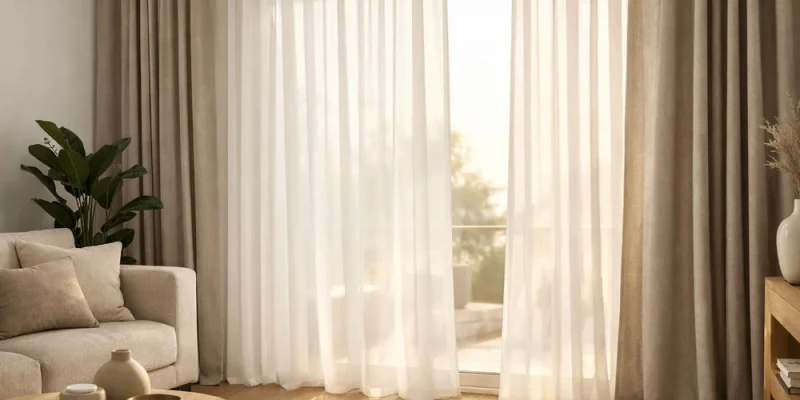
The right curtain fabric depends on your light control needs and room function. Blackout curtains suit bedrooms and media rooms where darkness matters most. Sheer or linen fabrics work well in living areas. Pair your curtain choice with modern upholstery fabric to create a cohesive, comfortable space.
Every room tells a story through its fabrics. The curtains you hang and the upholstery you choose don’t just serve a function, they set the mood. Whether you’re after a light, breezy atmosphere or a cozy, darkened retreat, getting the fabric right makes all the difference.
What Sets Blackout Curtains Apart from Other Curtain Fabrics?
Not all curtain fabrics are built the same. Filter fabrics soften incoming light without creating real darkness. Semi-darkening fabrics sit in the middle-offering privacy while preserving some natural glow. Blackout curtains, however, block a significantly higher percentage of light, making them the go-to choice for bedrooms, nurseries, home theaters, and any space where unwanted light disrupts sleep or screen visibility.
The key to their effectiveness is fabric density. Tightly woven polyester blends, heavy synthetic materials, and technically coated fabrics all limit light penetration more than their lighter counterparts. Many of these fabrics also carry a secondary benefit: thermal insulation. A denser fabric slows heat loss in winter and limits summer overheating, which can contribute to lower energy costs over time.
Color plays a role here too. Darker shades intensify the darkening effect, while lighter neutrals, think pearl gray, sand, or dove gray, deliver solid performance without visually shrinking a room.
Which Curtain Fabrics Work Best for Each Room?
Choosing the right curtain fabrics means thinking room by room. Here’s a practical breakdown:
- Bedrooms: Velvet, heavyweight polyester, or thermal-lined blackout fabrics are ideal. They block light, reduce outside noise, and help regulate room temperature.
- Living rooms: Linen or cotton fabrics strike a balance. They filter sunlight softly, let air circulate, and suit a range of décor styles.
- Dining rooms: Silk, jacquard, or satin add elegance and catch light beautifully-well-suited to more formal settings.
- Kitchens: Opt for cotton or polyester, which are easy to clean, resistant to moisture, and practical in high-traffic areas.
- Home offices: Semi-darkening fabrics help manage screen glare without cutting out all natural light.
One common mistake is choosing a fabric that’s too heavy or dark for a small room, which can make the space feel enclosed. Length matters too-curtains that fall short of the floor tend to look unfinished and can undermine the effect you’re going for.
How Does Modern Upholstery Fabric Tie a Room Together?
Curtains don’t exist in isolation. The fabrics you choose for your walls, furniture, and soft furnishings all interact with one another. This is where modern upholstery fabric becomes a key part of the conversation.
Upholstered headboards, wall panels, and seating pieces have moved well beyond purely functional roles. In 2025, modern upholstery fabric choices, from velvet and linen blends to bold printed textiles, are being used to create texture-layered interiors with genuine personality. Deep blues and greens promote a restful atmosphere, while warmer earth tones like terracotta and mustard add energy and warmth.
Matching your curtain choice with your upholstered pieces creates visual continuity. A linen sofa pairs naturally with linen or cotton drapes. Rich velvet headboards call for curtains with weight and structure. When the fabrics in a room speak the same visual language, the overall effect feels intentional rather than assembled.
Conclusion
The best fabric decisions account for both function and longevity. Natural fibers like cotton and linen soften and improve with washing. Polyester holds its color well and requires minimal maintenance. Velvet adds luxury but benefits from regular care to maintain its pile.
Whatever your priorities, sleep quality, thermal comfort, acoustic softness, or pure aesthetics, start by identifying what each room actually needs. From there, the fabric choice becomes much more straightforward.









Comments